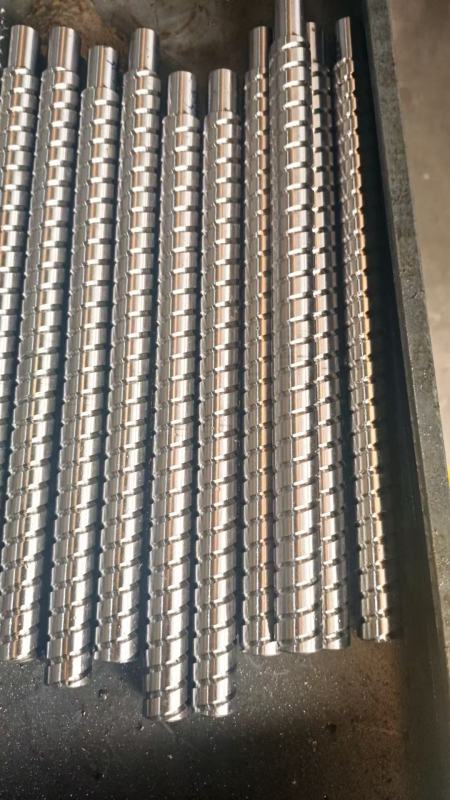
Automation equipment lead screw
Description
Automation equipment ball screw is a critical component in precision motion control systems, designed to convert rotational motion into linear motion with high efficiency and accuracy. These ball screws are widely used across various industries, including manufacturing, robotics, aerospace, and medical devices, where precise and reliable movement is essential. The product offers an optimal balance between performance, durability, and cost-effectiveness, making it a preferred choice for engineers and system integrators worldwide. The key characteristics of automation equipment ball screw include high load capacity, smooth operation, minimal friction, and long service life. These features ensure that the ball screw can withstand heavy loads while maintaining consistent performance over time. The design incorporates precision-ground balls and hardened steel raceways, which contribute to the overall strength and reliability of the component. Additionally, the ball screw is available in different configurations, such as single or double nuts, to suit specific application requirements. In terms of detailed description, automation equipment ball screw consists of a threaded shaft and a nut that contains recirculating balls. As the nut moves along the shaft, the balls roll within the grooves, reducing friction and increasing efficiency. This mechanism allows for precise positioning and smooth motion, which is crucial in automated systems. The ball screw can be customized with different lead angles, diameters, and lengths to meet the unique demands of each project. Moreover, the use of high-quality materials ensures resistance to wear and corrosion, extending the lifespan of the component. Automation equipment ball screw finds extensive use in a variety of applications, such as CNC machines, 3D printers, industrial robots, and automated assembly lines. In these environments, the ball screw plays a vital role in ensuring accurate and repeatable movement, which is essential for maintaining product quality and production efficiency. It is also commonly used in precision instruments and testing equipment, where even the slightest deviation can impact results. The versatility of the ball screw makes it suitable for both high-speed and low-speed operations, depending on the specific needs of the system. User feedback highlights the reliability and performance of automation equipment ball screw in real-world applications. Many users have reported improved efficiency and reduced maintenance costs after integrating this component into their systems. Engineers appreciate the ease of installation and the compatibility with existing machinery, which simplifies the integration process. Additionally, the quiet operation of the ball screw is often cited as a significant advantage, especially in environments where noise levels must be kept to a minimum. Common questions about automation equipment ball screw include inquiries regarding its load capacity, maximum speed, and maintenance requirements. While the exact specifications may vary based on the model and configuration, most ball screws are designed to handle substantial loads without compromising performance. The maximum speed depends on factors such as the lead angle and the type of bearing used. Regular lubrication and inspection are recommended to ensure optimal functionality and longevity. Some users also ask about the availability of custom solutions, which is typically offered by manufacturers to accommodate specialized needs. Overall, automation equipment ball screw is a versatile and essential component in modern automated systems. Its ability to deliver precise and efficient motion makes it a valuable asset in a wide range of industries. Whether used in industrial machinery, robotics, or precision tools, the ball screw continues to play a crucial role in advancing automation technology. With its combination of durability, accuracy, and adaptability, it remains a top choice for engineers seeking reliable and high-performance motion control solutions.


You may also like


${currentPro.title}