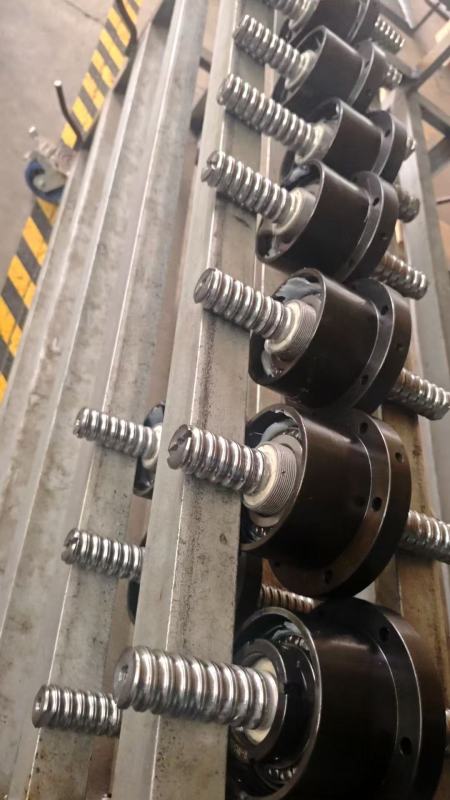
Rotating nut for costomer
Description
Product Description: Ball Screw The ball screw rotating nut is a precision mechanical component designed to convert rotational motion into linear motion with high efficiency and accuracy. This product, known as the lead screw rotating nut, plays a crucial role in various industrial applications where precise control and smooth movement are essential. Whether used in automation systems, CNC machines, or robotic arms, the ball screw rotating nut ensures reliable performance and long-term durability. Key Features of the Ball Screw Rotating Nut: The ball screw rotating nut is engineered with advanced manufacturing techniques to provide exceptional load capacity, minimal friction, and high-speed operation. It features a robust construction that withstands heavy-duty use while maintaining consistent performance over time. The design incorporates precision-ground threads that allow for smooth engagement with the ball screw, resulting in accurate and repeatable motion. Additionally, the rotating nut is available in multiple configurations to suit different application requirements, including standard, sealed, and high-precision models. Detailed Description: A ball screw rotating nut is an integral part of a ball screw assembly, which consists of a threaded shaft (ball screw) and a nut that moves along the shaft. As the ball screw rotates, the nut translates linearly, enabling controlled movement in machinery. This mechanism is widely utilized in industries such as manufacturing, aerospace, medical devices, and automotive systems due to its ability to deliver high precision and efficiency. The lead screw rotating nut, often used interchangeably with the ball screw rotating nut, may refer to similar components but typically involves a different type of screw mechanism, such as a trapezoidal or Acme thread, which is less efficient than a ball screw system. However, both types serve the purpose of converting rotational motion into linear motion, making them valuable in various engineering applications. The ball screw rotating nut is constructed from high-quality materials such as stainless steel, carbon steel, or hardened alloys, ensuring resistance to wear, corrosion, and deformation. The internal ball bearings within the nut facilitate smooth rotation and reduce energy loss, allowing for faster and more efficient operation. This makes it ideal for applications that require high-speed movement without compromising on accuracy. The nut can be customized with different sealing options to protect against dust, moisture, and other contaminants, extending its lifespan and maintaining optimal performance. Use Cases: The ball screw rotating nut finds extensive use in automated production lines, where precise positioning is critical. In CNC machines, it enables accurate tool movement, ensuring high-quality machining results. In robotics, it allows for smooth and controlled motion of joints and limbs. In the medical field, it is used in surgical robots and diagnostic equipment to ensure precise and safe operations. Additionally, it is employed in 3D printers, where it facilitates the accurate movement of print heads and build platforms. The lead screw rotating nut, though less common, is also used in applications where cost-effectiveness is a priority, such as in certain types of conveyor systems and manual adjustment mechanisms. User Reviews: Many users have praised the reliability and performance of the ball screw rotating nut. One user noted that it significantly improved the accuracy of their CNC machine, allowing for finer cuts and better surface finishes. Another user highlighted the ease of installation and the quiet operation of the nut, which reduced noise levels in their workshop. A third user mentioned that the product's durability exceeded expectations, even after extended use in a high-load environment. Overall, the feedback reflects the high quality and effectiveness of the ball screw rotating nut in real-world applications. Frequently Asked Questions: What is the difference between a ball screw rotating nut and a lead screw rotating nut? The main distinction lies in the type of screw mechanism they engage with. A ball screw rotating nut works with a ball screw, which uses rolling balls to minimize friction and improve efficiency. In contrast, a lead screw rotating nut interacts with a lead screw, which typically has a trapezoidal or Acme thread and operates with sliding contact, resulting in higher friction and lower efficiency. While both components convert rotational motion into linear motion, the ball screw rotating nut is preferred for high-precision and high-speed applications. Can the ball screw rotating nut be used in high-temperature environments? Yes, the ball screw rotating nut can be used in high-temperature environments if it is made from heat-resistant materials such as stainless steel or special alloys. However, it is important to select the appropriate model and lubrication to ensure optimal performance under extreme conditions. How do I maintain the ball screw rotating nut? Regular maintenance includes cleaning the nut and screw to remove debris, applying lubricant as recommended by the manufacturer, and inspecting for signs of wear or damage. Proper maintenance extends the lifespan of the component and ensures continued smooth operation. Is the ball screw rotating nut compatible with all ball screws? While the ball screw rotating nut is designed to work with standard ball screws, compatibility may vary depending on factors such as pitch, diameter, and thread type. It is advisable to check specifications before purchasing to ensure proper fit and function.


You may also like


${currentPro.title}